
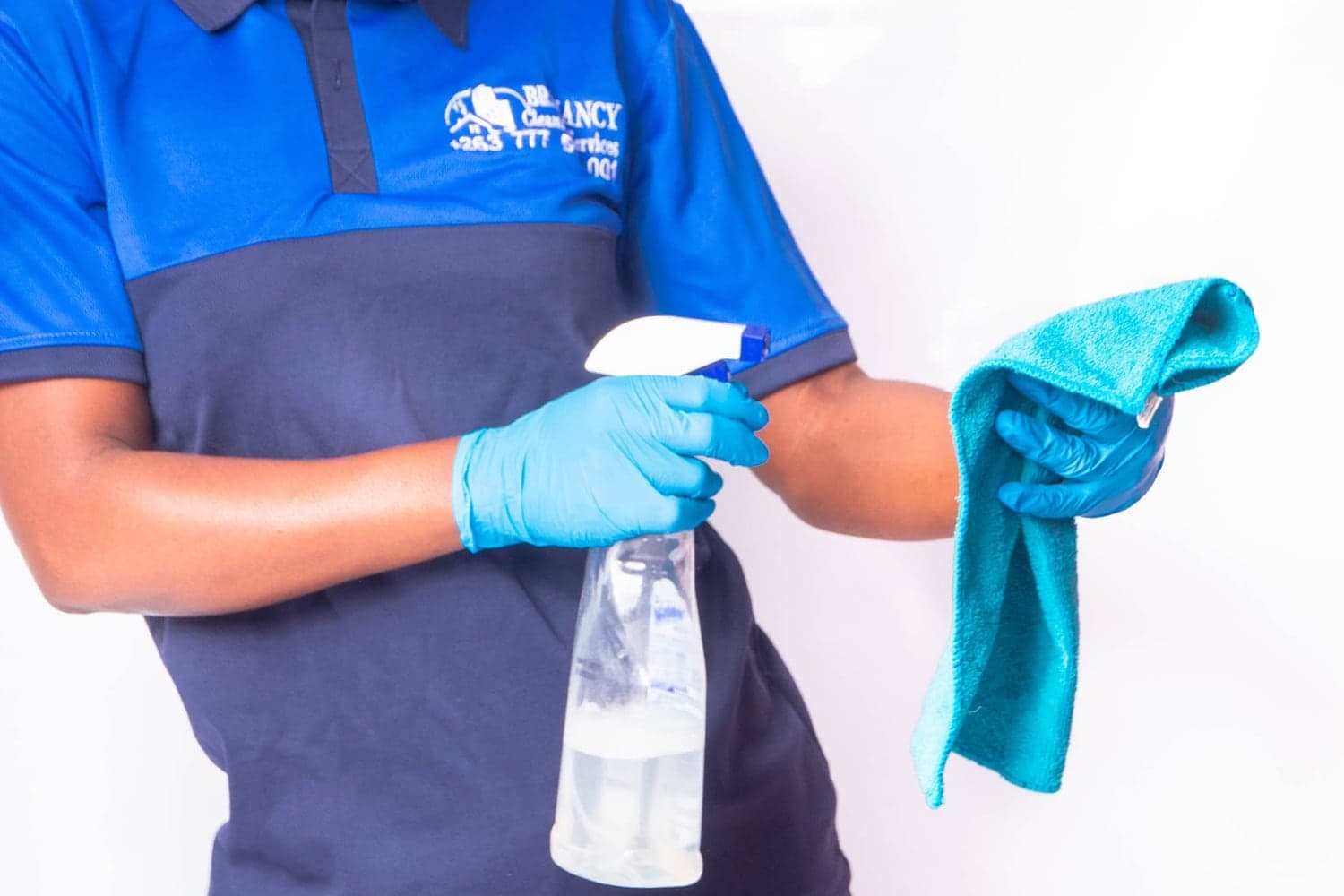
Most workplace hygiene policies fail for the same reason most gym memberships fail: they are written for an ideal week rather than a real one. A hygiene standard that survives contact with a busy office is specific, short, assigned to someone by name, and built around the small number of surfaces that actually matter.
Start with the high-touch inventory
Walk your building and list every surface that multiple people touch in a day. It is usually a surprisingly short list, and it is where nearly all transmissible contamination moves.
- Door handles, push plates and internal door edges
- Light switches and socket switches
- Lift buttons, handrails and stair rails
- Taps, soap dispensers, paper towel dispensers and hand dryers
- Toilet flush handles and cubicle locks
- Shared keyboards, mice, phones and desk headsets
- Printer and photocopier control panels
- Kitchen appliance handles, kettle, microwave keypad and fridge door
- Reception desk, signing-in pen and card reader
- Meeting room table edges, chair backs and remote controls
- Vending machine and water cooler buttons
Set frequencies and write them down
Assign every task to a frequency band and publish it. Ambiguity is what causes tasks to fall between the cleaner, the office manager and "someone".
- Multiple times daily: restrooms, kitchen surfaces, high-touch points, waste in food areas
- Daily: desks, floors in circulation areas, reception, meeting rooms after use, all bins
- Weekly: internal glass, vacuum full floor area, kitchen appliances inside, skirtings and vents
- Monthly: window sills and tracks, upholstery vacuum, cable trays, storage areas, high-level dusting
- Quarterly: carpet extraction, chair and partition cleaning, external glass, full deep clean
Make hand hygiene the path of least resistance
Compliance is a design problem, not a discipline problem. Put sanitiser where hands already are: the entrance, the lift lobby, outside meeting rooms, at the kitchen door, rather than where it is tidy to put it. Keep restrooms stocked without exception, because an empty soap dispenser undoes the entire policy. Choose products people do not mind using; harsh sanitiser goes unused.
Set a clear-desk expectation
Desks cannot be cleaned properly around clutter, so cleaners work around it and the surface never actually gets done. A simple end-of-day clear-desk habit (clear surfaces, no crockery left out, chair pushed in) makes overnight cleaning meaningfully more effective for zero cost.
Take food seriously
- Confine eating to designated areas. Desk eating drives pests and contaminates keyboards
- Empty food waste bins daily without exception, and clean the bin itself weekly
- Enforce a weekly fridge clear-out with a named owner and a fixed day
- Sanitise kitchen surfaces after each use, not at the end of the day
- Run crockery through hot water or a dishwasher, not a cold rinse
Ventilate on purpose
Air quality is the invisible half of workplace hygiene. Service and clean air conditioning filters on schedule, keep extraction running in restrooms and kitchens, and open up when weather allows. Sealed, recirculated air in a full building is how one person's illness becomes everyone's.
Have a clear sickness policy
The most effective hygiene control available to any employer is a genuine expectation that visibly unwell staff stay home. It costs one person's day. The alternative costs a department's week.
Assign it, inspect it, record it
Every recurring task needs a named owner and a visible record. A signed restroom check sheet is not bureaucracy. It is the mechanism by which the standard survives a busy month. If nobody signs anything, the standard exists only in the document.
A hygiene policy that nobody can recite is not a policy. Reduce it to the high-touch list, the frequencies and the named owner, and it will actually be followed.
If maintaining that rhythm internally is proving difficult, this is precisely the problem a janitorial contract solves: the frequencies are contractual, the owner is the supervisor, and the record is produced for you.
Need this done properly?
Our teams do this every day, with the equipment and training to back it up. Free assessment, written quote.