Professional cleaners are not faster because they work harder. They are faster because they work in a fixed order, use the right chemistry, and never touch the same surface twice. Most of what makes the difference can be adopted in your own home or office immediately.
Always work top to bottom, dry to wet
Gravity is doing half the work whether you cooperate with it or not. Dust light fittings, shelves and frames before you touch the floor, because everything you disturb lands downward. Complete all dry tasks (dusting, sweeping, vacuuming) before introducing any moisture, otherwise dust becomes mud and you have created work rather than removed it.
Clean in one direction, in a loop
Enter the room and work in a consistent direction, clockwise say, finishing each wall before moving on, and exit where you started. It sounds trivial. In practice it eliminates the constant backtracking that makes domestic cleaning feel endless, and it means nothing gets missed because you always know where you have been.
Give chemicals their dwell time
This is the most commonly skipped step and the most valuable. Almost every cleaning product needs to sit on the surface to work, typically anywhere from thirty seconds to ten minutes depending on the product. Spraying and immediately wiping is mostly mechanical scrubbing with a lubricant.
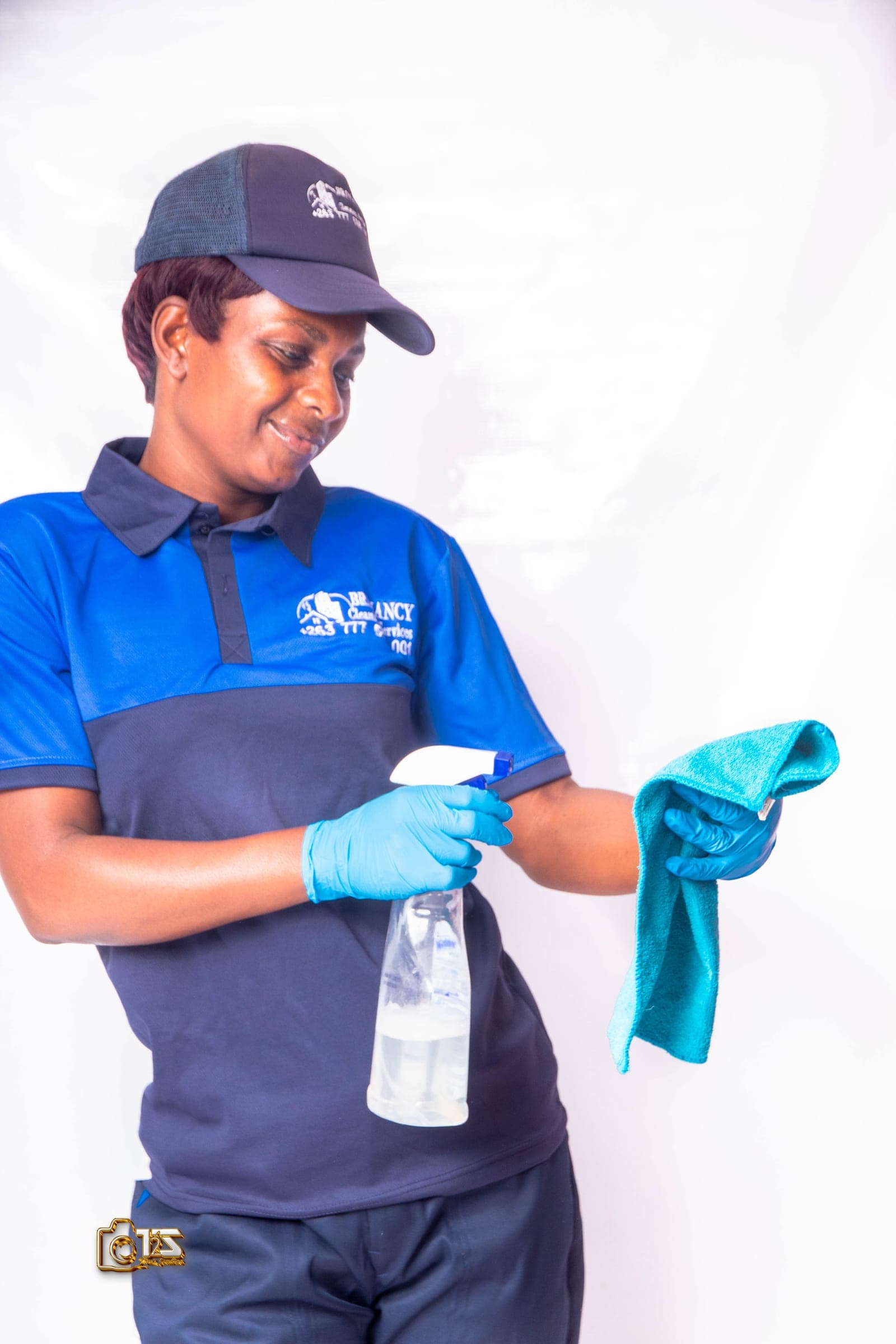
Spray the cloth, not the surface
For glass, screens, polished wood and anything electrical, apply the product to the cloth. Spraying directly causes overspray onto adjacent surfaces, drives moisture into seams and edges, and wastes product. The exception is when you deliberately want dwell time on a heavily soiled surface.
Use microfibre properly, and fold it
Microfibre traps soil in the fibre rather than pushing it around, which is why professionals use it almost exclusively. Fold the cloth into quarters: that gives you eight clean working faces. Turn to a fresh face the moment the one you are using stops gliding. A cloth used past that point is redistributing dirt, not removing it.
Wash microfibre separately, without fabric softener. Softener coats the fibres and destroys the electrostatic property that makes them work.
Colour-code to prevent cross-contamination
The cloth that cleaned the toilet must never see the kitchen counter. Professional operations run a colour system: commonly red for sanitary areas, blue for general surfaces and glass, green for food-preparation areas, yellow for washrooms other than the pan. Even a simple two-colour split at home meaningfully reduces the spread of bacteria.
Vacuum before you mop, and mop in an S pattern
Mopping over loose grit turns your mop into an abrasive and your floor into a scratched, streaky mess. Vacuum or sweep thoroughly first. Then mop in overlapping S-shaped strokes, working backwards out of the room, rather than in circles. Circles push soil into the same spot repeatedly and leave swirl marks as the floor dries.
Two buckets, always
One bucket for clean solution, one for wringing out dirty water. A single bucket means you are progressively mopping the floor with the dirt you just removed. This one change does more for floor appearance than any product on the shelf.
Treat high-touch points as a separate task
Door handles, light switches, taps, handrails, lift buttons, shared keyboards and desk phones carry far more transferable contamination than the large open surfaces that look dirty. Build a dedicated high-touch pass into every clean, ideally more often than the full clean itself.
Know when the job needs equipment, not effort
Some jobs cannot be fixed with a cloth. Carpets holding embedded soil, upholstery with odour in the foam, hard floors that have lost their seal, and post-construction dust in ceiling voids all require extraction, rotary machines or air movement. Scrubbing harder at those problems damages the surface without solving them. That is the point at which professional equipment earns its cost.
Cleaning is a sequence, not an effort. Get the order right and the same room takes half as long and stays clean twice as long.
Need this done properly?
Our teams do this every day, with the equipment and training to back it up. Free assessment, written quote.